Going to my Oma and Opa’s house felt like the world got quieter. They lived up on a mountain, and the property stretched out in every direction — gardens, fruit trees, paths that went on forever. The flower beds were so full that hummingbirds came right up to the kitchen windows. I can still picture sitting at their table, watching them hover just on the other side of the glass while something good was cooking on the stove.
My Oma was an incredible cook. She could make just about anything from scratch, often using the fruit and vegetables from their garden. One of my favourite things she made when I went to visit was Pfannkuchen.
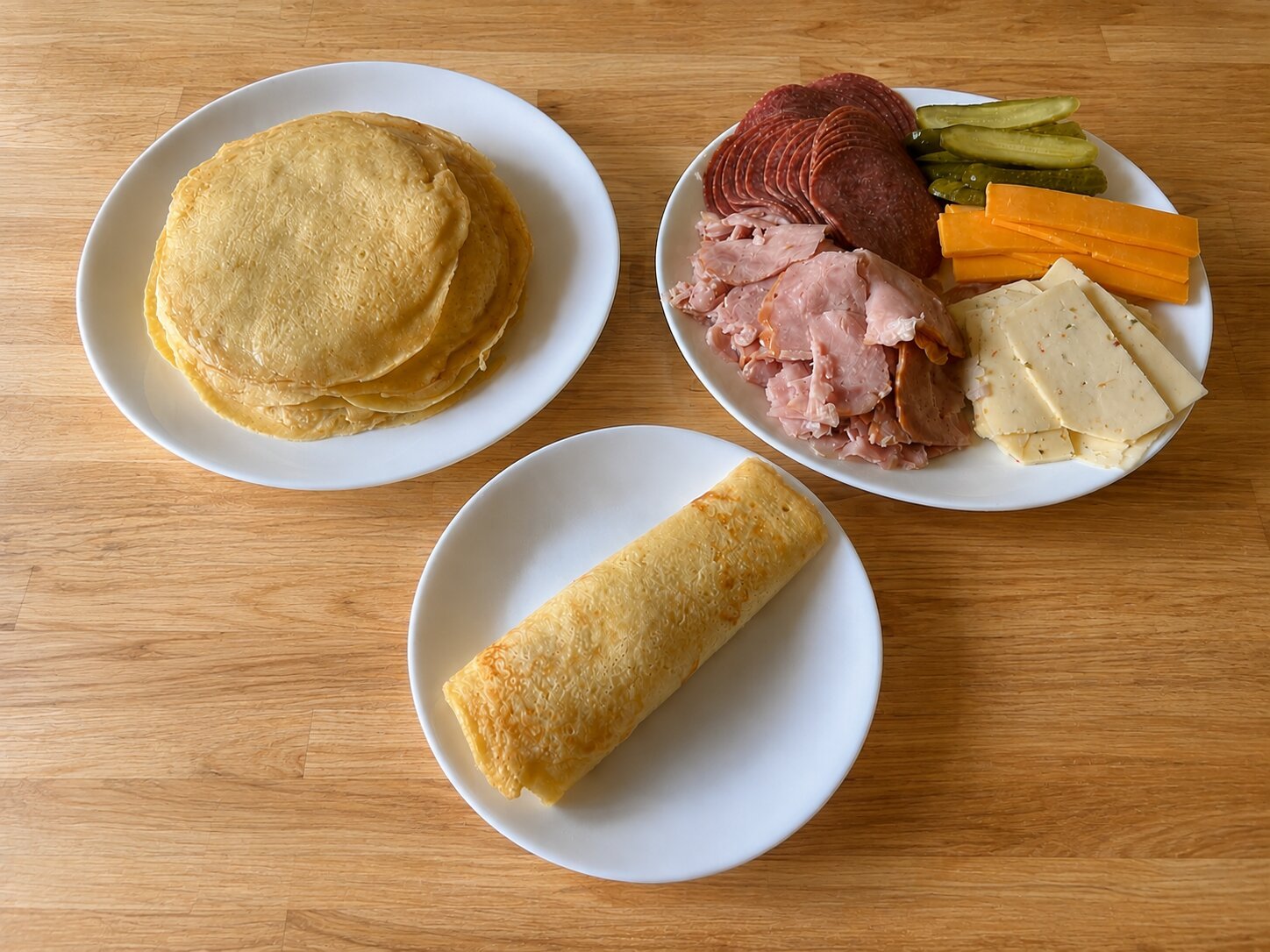
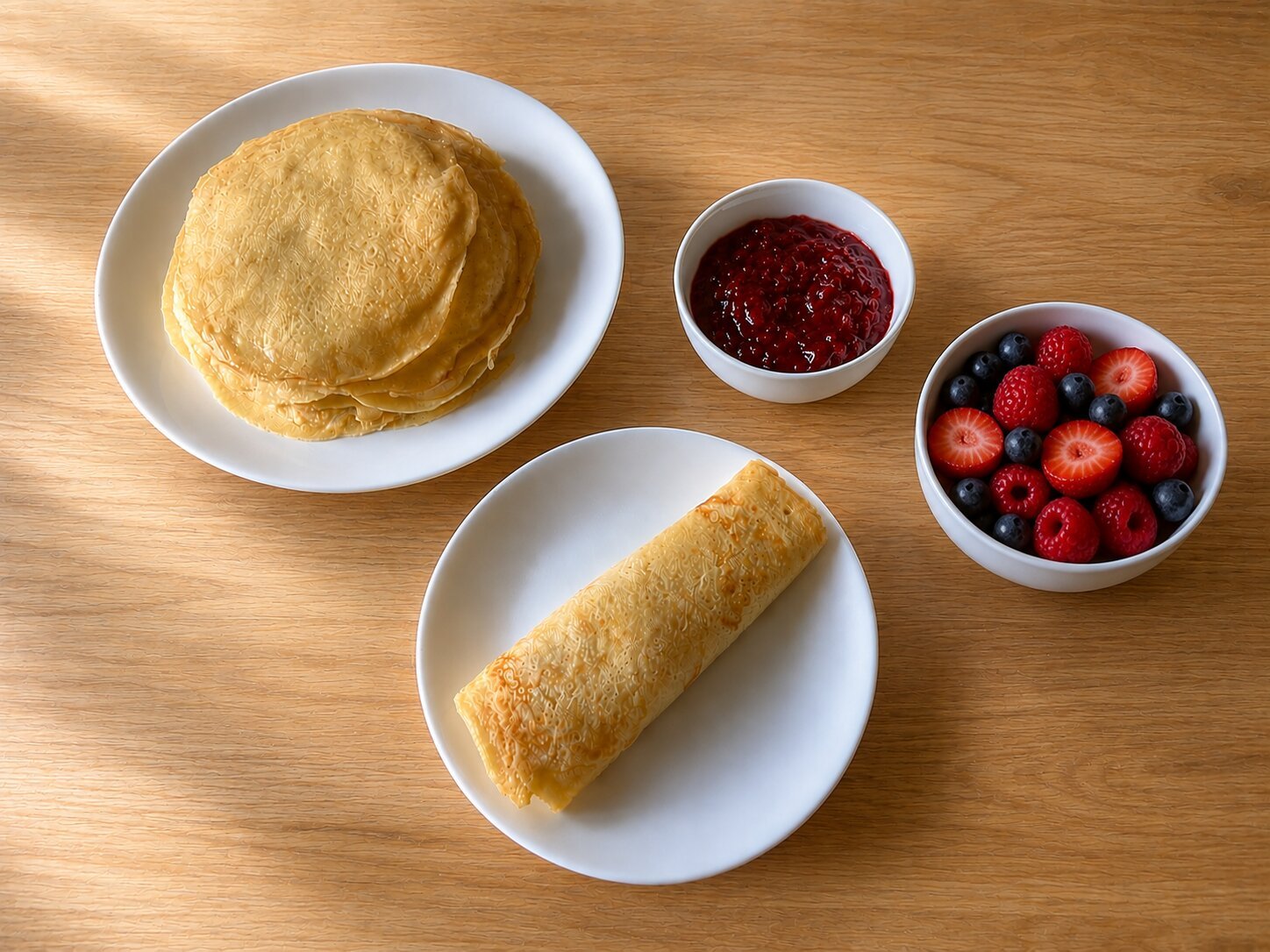
She would stack them on a plate in the center of the table with a selection of fillings, and everyone just helped themselves. You grabbed one, laid your fillings down the middle, rolled it up, and ate it with your hands. At lunch it was cold meat and cheese. At midday coffee it was usually one of her homemade jams. One batter, two meals.
I set them out the same way she did. A plate of Pfannkuchen in the middle, everything else around it, and everyone builds their own. That is the whole point. You pick your fillings, you roll it up, you eat it standing at the counter or sitting at the table. There is no wrong way to do it. If you want three, have three. If you want to try every filling on the plate, go for it.
Pfannkuchen are traditional German pancakes, slightly thicker than French crêpes but thinner than American pancakes. The batter comes together in about five minutes. You can serve them savoury or sweet. I’ve listed a few of my favourite ways to fill them below, but use whatever you like.
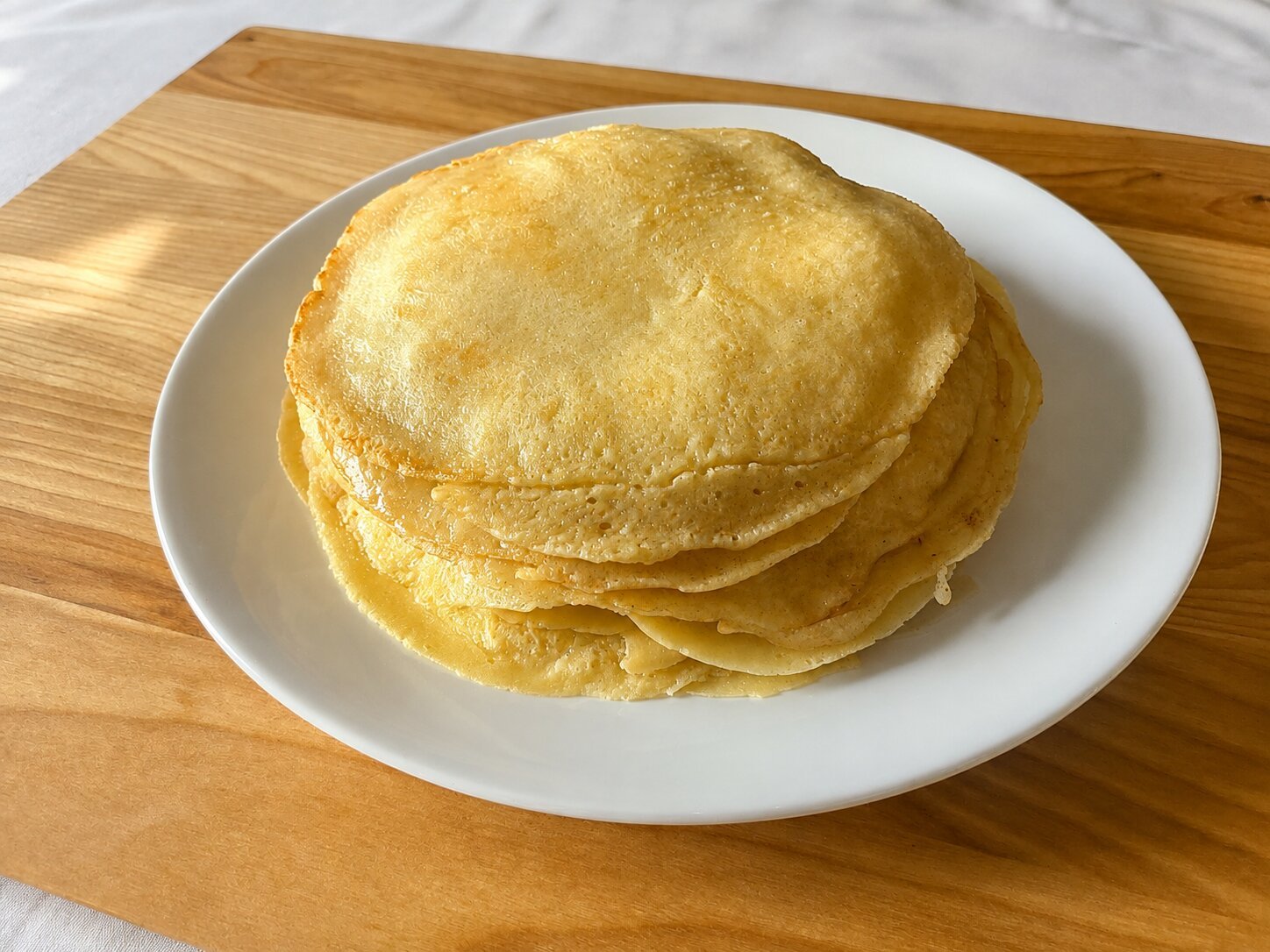
Pfannkuchen
Pfannkuchen is pronounced PFAN-koo-khuhn. The first syllable sounds like “pfan” with a sharp initial “p” and “f” blend, the middle sounds like “kook”, and the final part is a soft “h-uhn”
Yields: 10 to 12 pancakes
Batter: 5 minutes
Rest: 30 minutes minimum (or overnight)
Cooking: 2 to 3 minutes per pancake
Total: about 25 minutes active (55 minutes if resting the batter)
Ingredients
- 2 cups all-purpose flour
- 3 eggs
- 2 cups whole milk
- Pinch of salt
- Butter for the pan
For sweet pfannkuchen, add 1 to 2 tablespoons of sugar to the batter.
Instructions
1. Make the batter.
Whisk together the eggs and milk. Add the flour and salt and whisk until smooth with no lumps. The batter will be thinner than pancake batter but with a little more body than a French crêpe.
2. Rest the batter.
Let the batter rest in the fridge for at least 30 minutes. Overnight works just as well. Making the batter ahead is a great option if you want to simplify things at mealtime.
3. Heat the pan.
A 10-inch non-stick pan works best. It gives you enough room to tilt and spread the batter thin. Heat over medium heat and add a small knob of butter before each pancake.
4. Pour and tilt.
Pour about 1/4 cup of batter into the centre of the pan and immediately tilt it in a circular motion to spread the batter as thin as possible. Work quickly. You want a thin, even circle.
5. Cook.
Cook for about 1 to 2 minutes until the edges begin to lift and the bottom is lightly golden. Flip and cook for another 30 seconds. Slide onto a plate.
6. The first one.
The first one is almost always a test run. The pan needs to find its temperature and it rarely turns out perfectly. It is still good to nibble on while you wait for the rest.
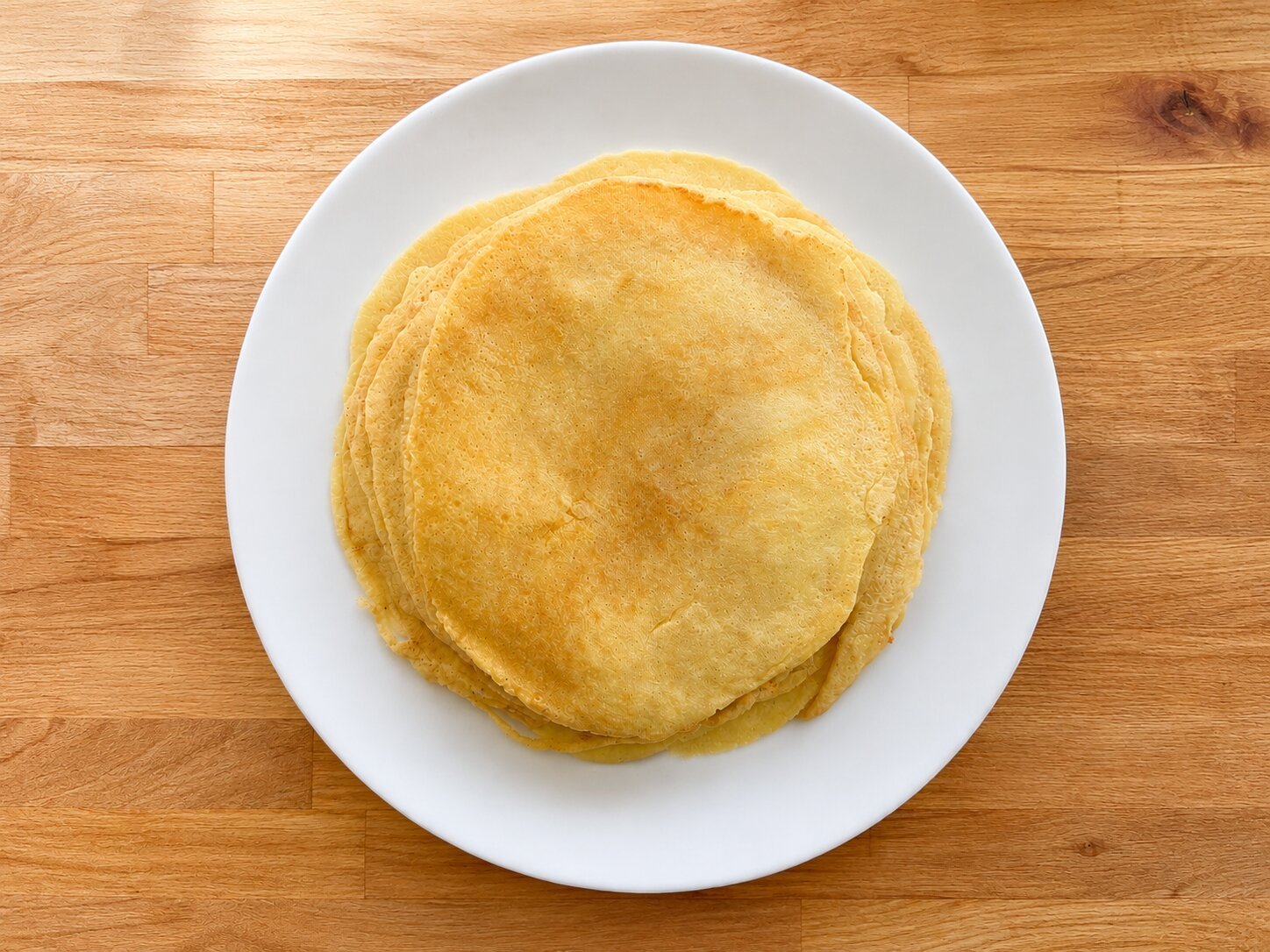
7. Repeat.
Continue with the remaining batter, stacking the finished pancakes on a plate. They will not stick to each other.
To serve
Put the plate in the centre of the table alongside your fillings and let everyone help themselves. Lay your fillings on the pancake, roll it up, and eat.
Suggestions
Savoury:
Ham and havarti is a good starting point, mild and satisfying. Salami with sharp cheddar has a bit more bite. If you have a European deli nearby, it is worth a visit for traditional German cold cuts and cheeses.
Sweet:
Strawberry or raspberry jam is the classic. Peanut butter and sliced banana is another favourite. A drizzle of maple syrup works well too. Fresh berries on their own or alongside the jam are a nice touch. If you can find Summerland syrups, made in Summerland, BC, their fruit syrups are something special. My parents always had them in the house growing up.
♥