Ingredients
Method
- Proof the yeast. Add the warm water, yeast, sugar, and 1/2 cup of the flour to a large mixing bowl. Stir well and leave it for 20 minutes. It will get bubbly and smell yeasty. That is how you know the yeast is alive. If nothing happens after 20 minutes, stop here. Your water was too hot or too cold, or your yeast is past its prime. Start fresh before you go any further.
- Build the dough. Add the olive oil, salt, and 2 cups of the flour. Mix with a wooden spoon until it comes together enough to turn out onto a lightly floured surface.
- Knead. Knead for about 10 minutes, adding the rest of the flour a little at a time to keep the dough from sticking. You want it soft, elastic, and slightly sticky. Do not add too much flour or the crust will turn out tough.
- Oil the dough. Form the dough into a ball and place it in a large oiled bowl. Drizzle a few drops of olive oil over the top and coat it lightly so the surface does not dry out.
- Let it rise. Cover with a clean kitchen towel and put it somewhere warm for about 2 hours, or until it doubles in size. I like to put it in my oven, here is my secret. Turn your oven to its lowest heat for just one minute, then turn it completely off and put your covered bowl inside. It should feel mild in there, like a warm day, not hot. Don't leave the oven on — too much heat will kill the yeast.
- Divide and chill. Punch the dough down, divide it into 2 balls, and place each in a large zip-lock bag. Refrigerate overnight. This is where the flavour develops, so do not skip it.
- Bring to room temperature. When you are ready to make your pizza, take the dough out of the fridge and let it come to room temperature, at least 30 minutes. Cold dough will fight you.
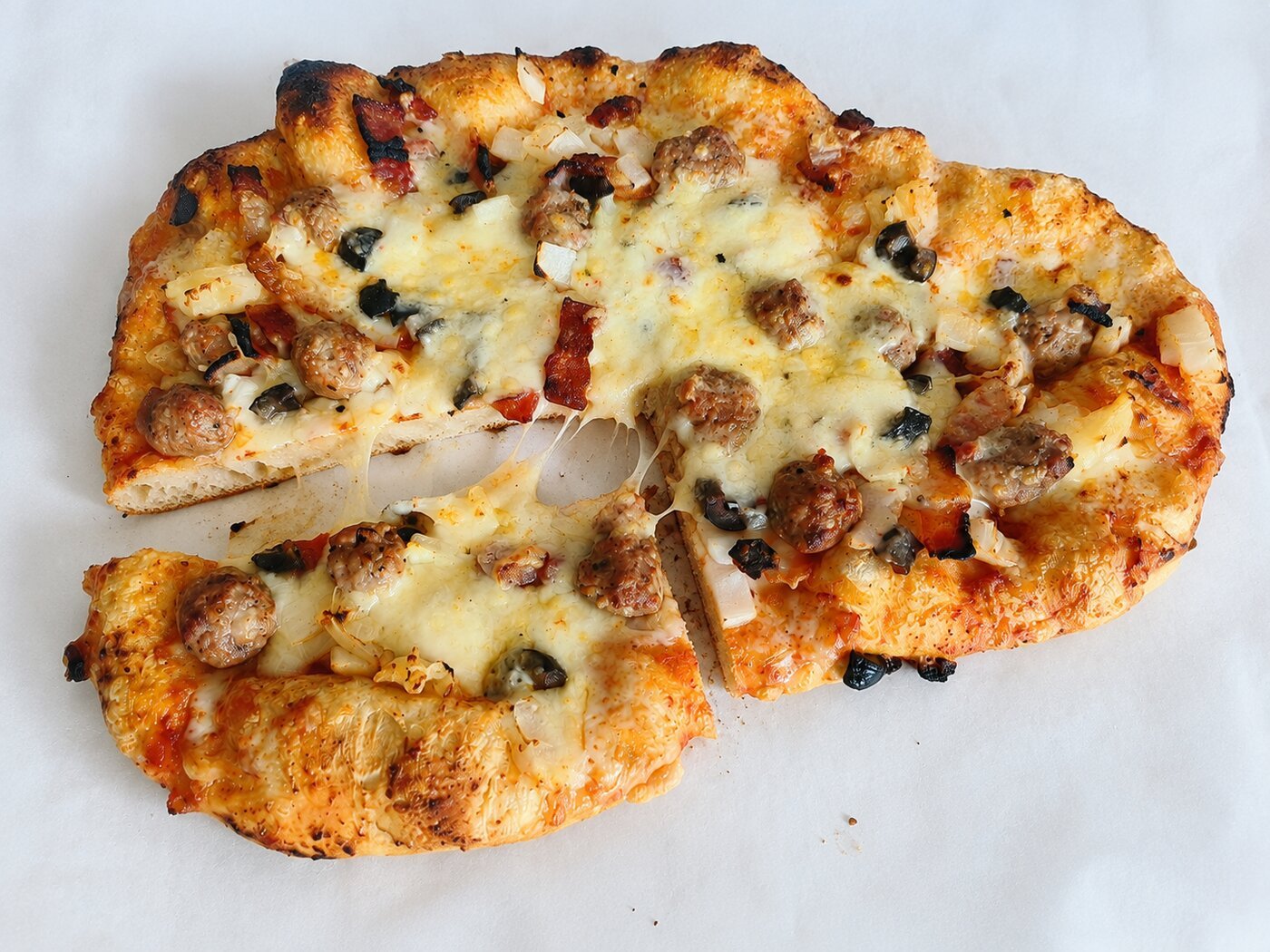
- Stretch, top, and bake. Stretch the dough by hand, working from the centre out and rotating as you go. You want it thin. Top it however you like. Bake in an oven preheated as hot as it will go, ideally 500°F (260°C), with a pizza stone or heavy baking sheet that has been heating inside for at least 30 minutes. Bake for 10 to 12 minutes, checking from 8 minutes on, until the crust is golden and the cheese is bubbling with a few brown spots.
Notes
Oven temperature: Bake in your hottest oven, around 400 to 500°F. The hotter it runs, the crispier the crust.
What "cold ferment" means: it's just a slow rise in the fridge. Instead of letting the dough rise fast on the counter, it sits in the fridge overnight. The cold slows the yeast right down so it works over many hours, and that's what builds the deeper flavour. The next day, take it out and let it sit on the counter about 30 minutes to lose the chill before you stretch it.
What yeast to buy: active dry yeast is the granular yeast sold in small paper packets, usually in strips of three, near the flour and baking soda. One packet is 2 1/4 teaspoons, exactly what you need here.
Water temperature: The water should be warm but not hot, around 110-115°F. Warm enough to wake the yeast up, not so hot it kills it. Yeast dies above about 140°F. No thermometer? Run the tap until it feels hot on your wrist but not painful, and lean to the warmer side of comfortable.
Bread flour vs. all-purpose: Bread flour gives you the chew that makes this crust what it is. All-purpose will work and gives a softer result. Both are fine.
The overnight rest is worth it: A few hours will get you a decent crust. Overnight will get you one you want to make again.
Getting it into the oven: The easy way in a home oven is to build the pizza on a piece of parchment, then lift the whole thing onto the hot stone or baking sheet. If you would rather use a pizza peel, dust it with semolina flour or cornmeal first, never regular flour. The coarse grains act like little ball bearings so the dough slides off cleanly, while regular flour just burns and leaves the bottom tasting bitter. Either way, work quickly. The longer the topped dough sits, the more it sticks.